

Third Year with Active Faults

London has been on a mildly disconcerting streak of sunniness for three weeks straight, and I have been violently depressed. I normally hesitate to word it as such, in fear of adding to the already rampant abuse of the clinical term that erodes its gravitas. But there’s no alternative expression for what I feel that is especially harder to pin down now, since the weather can no longer serve as the excuse. I can no longer attribute it to SAD, or caffeine withdrawal symptoms, menstrual hormones. Depression at 16 tasted sharp and frightening like vodka, but depression at 26 tastes like wine casked past its prime. This variant of it feels new and cavernously deep, like it’s reverberating inside my bones.
Obviously it has to do with the state of our world and how little we can do to change it. I used to work for the United Nations, believe it or not, and felt proud of it up until the very end of my contract. I was ready to return to it in Geneva, in New York, in the field operations that supposedly do more “hands-on” work that further the humanitarian mission. But after Gaza, I could not stand the idea of returning to it. What would I do—how would I cope—when I finish climbing to the top in 30 years only to realise that I must, too, stand aside and watch genocides repeat themselves because they absolutely will?
Since then, I have marched alongside millions of Londoners who couldn’t just stand aside and watch. A couple of university friends and I snuck back to our alma mater one night. We wanted to show support to younger faces camping on the quad lawn that once saw us eating cold pizzas to pass long, lazy, sunny afternoons. They started checking student IDs at the entrances, but we, like the real alumni that we are, got in through an underground passageway that only people who breathed those walls would know about. We wore masks to hide our identities and acted as if we belonged, because we did, once. We got some snacks from Sainsbury’s and gave them to a couple of masked girls by the edge of the encampment, and we said you must fight on for us, in our name. That if we were younger, we would be right here with you, and people out there are rooting for you. That courage is a virtue in the highest regard, and rage is beautiful. I felt like those Eunhwa alumni who held up signs that said “언니 왔다, “your older sisters are here”, in their protests across the globe, likewise against a system rotting from the inside out. They said thank you over and over again. We were all on the verge of tears.
Since then, I watched inferno sweep through Californian mountains in ways unimaginable even by Dante himself, and Abby texted me saying her neighbourhood is where three burgeoning purgatories intersect. I was losing sleep over the thought of losing her. Her colleague’s flat is covered in soot and ash that blew in through the window cracks. She asked me what she should save from her flat if she were to flee. We mused over what I would save if I were in that situation. I honestly drew a blank and said my grandmother’s watch. I realised how much of my life I overvalued, is disposable, and ultimately laughably insignificant. Somehow I didn’t feel liberated by that epiphany.
Since then, I watched a clown do whatever he wants with seemingly unbridled power, and dominoes fall far too quickly in his wake. Insert any world leader’s name in the sentence previous and it will still stand. It will always stand.
Since then, I went back home for the second anniversary of my grandmother’s death. We bowed deep at her grave, and then my paternal grandfather’s just down the line, and my paternal grandmother’s, because it’d be rude not to say hi when we were already there. A neat domino line of tombs under the shade of an oak tree. Two of them died of COVID even though their death certificates say otherwise, because no one was allowed to die of COVID. We laid out three sets of pastries and fruits as offerings, each personalised according to their dietary preferences. My grandma loved red dragon fruit, a thing that tastes like nothing. My grandpa loved baijiu, especially Er Guo Tou. He endearingly called them xiao er. My other grandma loved unconventional tropical fruits, so there were mangosteens with their insides that looked like cat paws. We ourselves had a good meal in a farm-to-table restaurant by the cemetery, buried deep in Beijing’s mountains, which were yet to catch on wildfire. We weren’t allowed to burn any incense for that reason.
This past winter was one when I couldn’t stop envisioning an alternative. A different way everything would have played out had I stayed. Stayed and kept close to everyone, got into a Chinese university and a 9 to 5, and then a whole life where occasions will be lived through and not missed. Births and deaths and every single growth in between, witnessed and not handed down to me like a hand-me-down, a postscript. To be included, not as a posthumous offering bestowed upon a whining, dead child but because I was present then, in the rooms and on the dinner tables. To not have to lose my bearing on an inside joke, the latest household appliance in vogue, a viral TV show. To not have to fit back into a puzzle that I became too deformed for, desperately trying to make a picture I can no longer recognise. To not have to lose the language that made me who I am.
I met up with W to have Korean food in Wangjing and told her I’ve been thinking about coming back. W said I should never come back. Things are bad and people are unhappy. There are no jobs, no prospects, no hope. But my mum started keeping me in the dark about her hospital visits, I said. And I kept her from knowing mine. For the past decade I’ve been grieving since the day I left, I said, because I’ve been losing since the day I left. And it’s looking as if the losses added up to nothing.
All the while, I’ve been writing about a Tibetan boy, a Pink Fox, video games where you can eye-fuck men, and the Spring Festival box office. I work and I have a socially appropriate answer to all the routine questions in small talks, but I’m never exactly doing anything “right” or “enough”. Perhaps the problem is precisely this, that everything I’m doing and will go on to do appears frivolous and trivial in the face of more permanent and irreversible collapses.
It is simply too sunny. It is a given in this country that if the sun’s out, you must head out too. Leave your house, stretch your legs and wear your sunglasses. Go for a run or lie down in a park and soak everything up because this is too good to be true and it never lasts. At this rate of vitamin D exposure, I’m convinced that we’ve made a Faustian deal with some aliens on the control panel of our simulation, and we won’t get any more sun for the rest of the year. It’s exhausting to be this ecstatic, to have picnics with Prosecco and strawberries with cream while cobalt and copper mine workers in Congo die without a headline. We are not built to endure so much solar energy and so much discrepancy in how we are allowed to exist. I start to see why Floridans are mad.
I want to know where this is heading, and even with this piece I’m writing I find myself yanking these paragraphs forward towards a clear, defining, upticked closure: we must March On, Grit Our Teeth, Keep Calm. Maybe it’ll all work out in the end. Maybe one day this will all be worth it. Hope is a tenacious thing to kill.
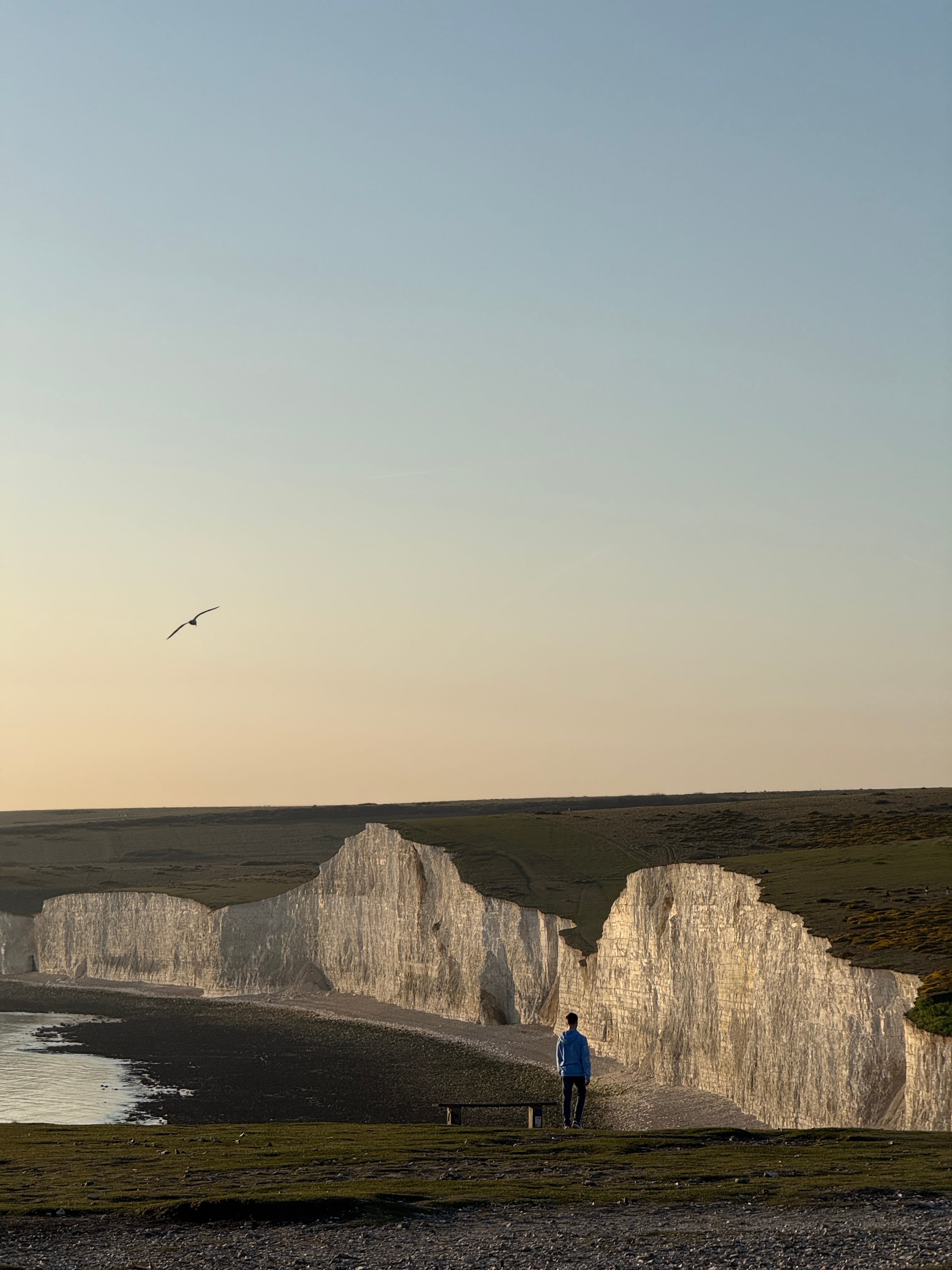
I want to know where we’re all heading. Climate catastrophes, most definitely. What else is in store? More emaciated and dismembered children? More 11-minute space hit-and-runs? More pain-bags and pain-buildings and pain-cities? I go on long walks around the city without headphones, which, put crudely by my friends, means that I “rawdog” it. I go on even longer walks, out of town and by the coast. Neolithic chalk cliffs shine a blotchy white like television static. They’re as old as dinosaurs.
I walk until my legs are filled with static. I eat a sausage roll in a wildflower meadow right by the cliff edge, imagining the sounds it would make if this bit of chalk chooses to finally let go of its weight. The sounds I would make when I finally let go. I doubt I would even make a sound, the silence around me so thick I dare not unspool it with a scream. A seabird flies by and I swear I hear the way air flares up like flames between its feathers, spreading them open like how a palm would open under water. My thoughts go deaf for the first time in forever.
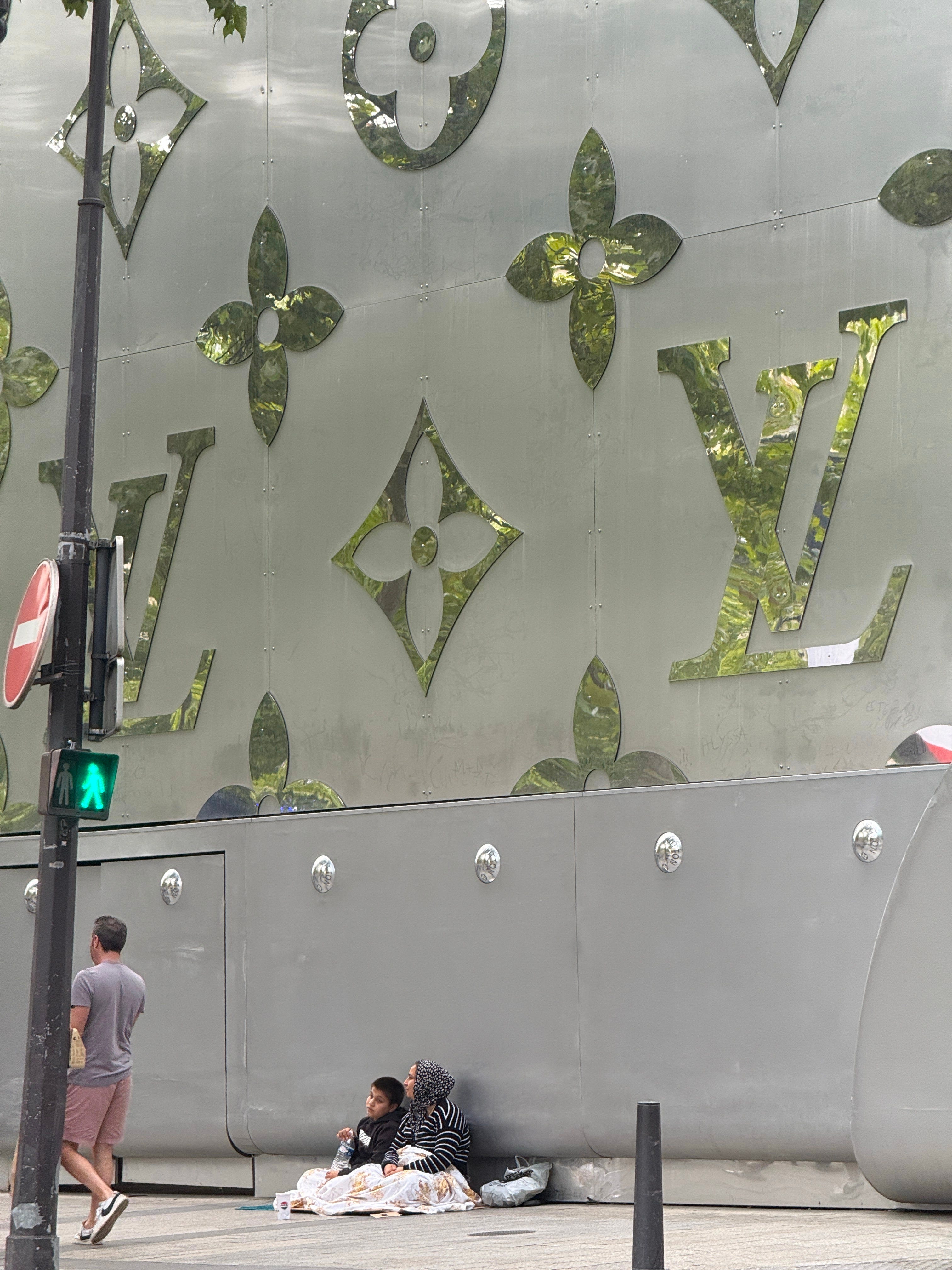
Reading Rilke helps, but only up to a certain point. I chant the line “out of God’s web you cannot fall” like a Buddhist would smooth her fingertips against prayer beads, even though no versions of God have yet to convince me that a Divine Plan Will Sort Us Out. I travel a lot, but instead of the Eiffel tower that sparkles every hour I see a homeless family sleeping outside of Louis Vuitton’s flagship storefront that looks like a box, a coffin. Instead of the canals and museums and Van Gogh (pronounced like a cough) I see the pushback against a far-right political party and protest placards about affordable housing and three white policemen kneeling on top of a non-hostile black man during an arrest. Knees are what you use to kill tenacious things.
I think about a Do Ho Suh exhibition at the Tate, a guy who dreams of carrying his home with him so he covered it with paper and traced its outlines with graphite for 9 years straight. He created an exact replica of the hanok, pieces of paper propped up by hollow beams. I don’t know what he feels when he uninstalls it again and again, whether the home weighs a little less with every step he takes.
I go home for the summer and I see a spectacle of normalcy. Labubu is now even smaller and cuter and fluffier and in 26 different colours. I almost meet up with a friend in Shenzhen. We got to know each other online, in 2019, when we were writing fan fiction like everything else doesn’t matter much. I haven’t been able to bring myself to write fan fiction for a long time. The earth is burning and there is no room for stories. She’s now the luckiest few who works for Tencent and she cancelled our dinner plans the day before, crying as she got called in on a Sunday to do some emergency database repair.
We messaged back and forth that night, around midnight, and she told me every time she leaves the office at this hour she feels like she would never be able to write anything again. I lost the flair, the spirit, the gift, the way with words I used to have, she said. I cried too, because she was one of the most talented writers I’ve ever known. I cry listening to 散人乐队 stuck in the evening rush hour traffic of Beijing’s ring roads, because the song talks of those who try their hardest to survive only to be crushed like ants. Ants in birdcage apartments in a sleeptown, far far away from the black hole where power and wealth concentrates in this city, with families that rely on them and glass buildings that reject them even though they were the ones who built them. World is a fog and we’re clockwork figurines flooding into trenches and the English language cannot begin to translate the poignancy of “提着炒饭和卤蛋我甩不开手”. I have to keep my arms still when I walk because I’m holding some takeaway fried rice because it’s all I can afford, but I’m still treating myself with an extra braised egg. I eat and work and ache and I’m ordinary, but even ants dream.
I think about the deers I saw on a hike this spring, quietly regal beings, grazing in woodlands and then tucking their hooves under their velvety bodies, loafing like cats under greening trees.
For a long while, deer used to mean something different to me. I used to be a fan of Lu Han whose surname in Chinese is the word for deer, and without whom Active Faults would not exist. He turned 35 this year. I am now the age he was when he made an album that used to mean the world to me.
We don’t talk enough about how fanning is often the act of drawing connections, and detaching the self from the fanned object entails a mournful severance of those connections. Dozens, if not hundreds and thousands of associations, cleared like browser cache. Years of memories purged clean like a pest control raid. You need to thoroughly forget why you order your coffee a certain way, the meaning behind your passwords, and why your heart leaps on hearing a vaguely familiar note, sung in a vaguely familiar way. I almost succeeded in forgetting my fondness for deer.
This past summer I half-heartedly tried to buy tickets to his new tour that I happened to be home for. I didn’t get them. Because of the “anti-empiricism and anti-fascist” military parade, the concert venue he usually use had become a curfew zone. He had to switch to a much smaller venue at the last minute, with a ceiling so low, a price scheme so outrageous and a seating arrangement so disorganised that even the die-hard fans felt cheated.
On Weibo I saw photos of his freshly dyed hair as an attempt to distract from his sunken cheeks, his thinning physique, a jawline that reads less like sexy and more like malnourishment and crisis. The peak of his fame this year was when his 7-year girlfriend, actress Guan Xiaotong, didn’t write him a Happy Birthday post for the first time since they got together, sparking rumours of a breakup. Both of them declined requests for comments, although Lu was seen coming out of bars drunk off of his face and doing late night livestreams where he was clearly high off of something.
I go back and listen to all the songs he’s released since I stopped being a fan of his. I go back and listen to the songs he made when I was still a fan of his. I now understand his choices back then, the impulses to create, to leave Korea and go back home, to get cuffed up with a girl 7 years his junior at the height of his success even though it might tank his girlfriend-stan-funded career. The hunger for companionship, for stability, for roots, for a retreat into comfort and an abandonment of a wider world out there, for the courage to say: I want to be small, smaller than life instead of bigger than life, for it is simply too much to exist sometimes.
I start to prepare for a settlement application, which is to say I start the proceedings of a humiliation ritual where I grit my teeth to prove my worth, my value to this society, my integration and assimilation, my absolute belonging and non-belonging. I am filled to the brim with emotions that words spill from the edge of it like blood, where every exhale feels like a howl and every inhale is hard labour. Then I feel nothing at all.
I exhaust all thoughts. I run myself dry. I couldn’t read anything that took me to a different, insignificant world that I had to muster up an ounce of concern for. I couldn’t watch any content of meaning because all I can hear is the scream of Yu Menglong, a young actor who was allegedly pushed off of a balcony after years of abuse by his managers and powerful brokers in the industry. I couldn’t drag myself to the theatres because all I can see are tower-high blazes in Hong Kong that remind me of Urumqi and white papers held up high without a single word written on them. The only book I finished this month is by Omar El Akkad, in which he writes that “daily life seems to invert and everything sheds its veneer of importance”. “I’ve lost the ability to be here”. “I want nothing to do with the West, the rules-based order, the shell of modern liberalism and the capitalistic thing it serves”.
Nothing helps, not even the decision to feel nothing. Nothing eases the dread that drapes softly around me, like a layer of fine dust.
Nothing I write here is new. I certainly hope so. Generations before me must have felt the same coat of dust lingering in their airways - but was their earth burning? Was their world led by a man who fucked teenage girls with no remorse?
I go on the final hike of this year to Mam Tor in the Peak District, or “Mother Hill”. I didn’t tell my mother about it. She’s always been a bit wary of my newfound hobby, which is to go as off-piste as possible and loathe humanity as if I am not complicit in it.
It is a sunny day, crisp like a green apple and not the red ones. My train pulls into a town called Hope and I think about the Life In the UK test that asks you to say, with your filthy immigrant mouth, whether it’s true or false that the British Empire reached its peak under Queen Victoria’s reign. It asks you whether it’s true or false that modern British society values diversity, human rights, and fairness above all. It wants you to say yes, yes of course it does. It asks you about the national flower of Wales and not the life you actually built here, your friends and found families, your neighbourhood dry cleaners and your favourite parks. It wants you to curse at it while you diligently study for it and desperately try to ace it, like a slut who says no when she means yes.
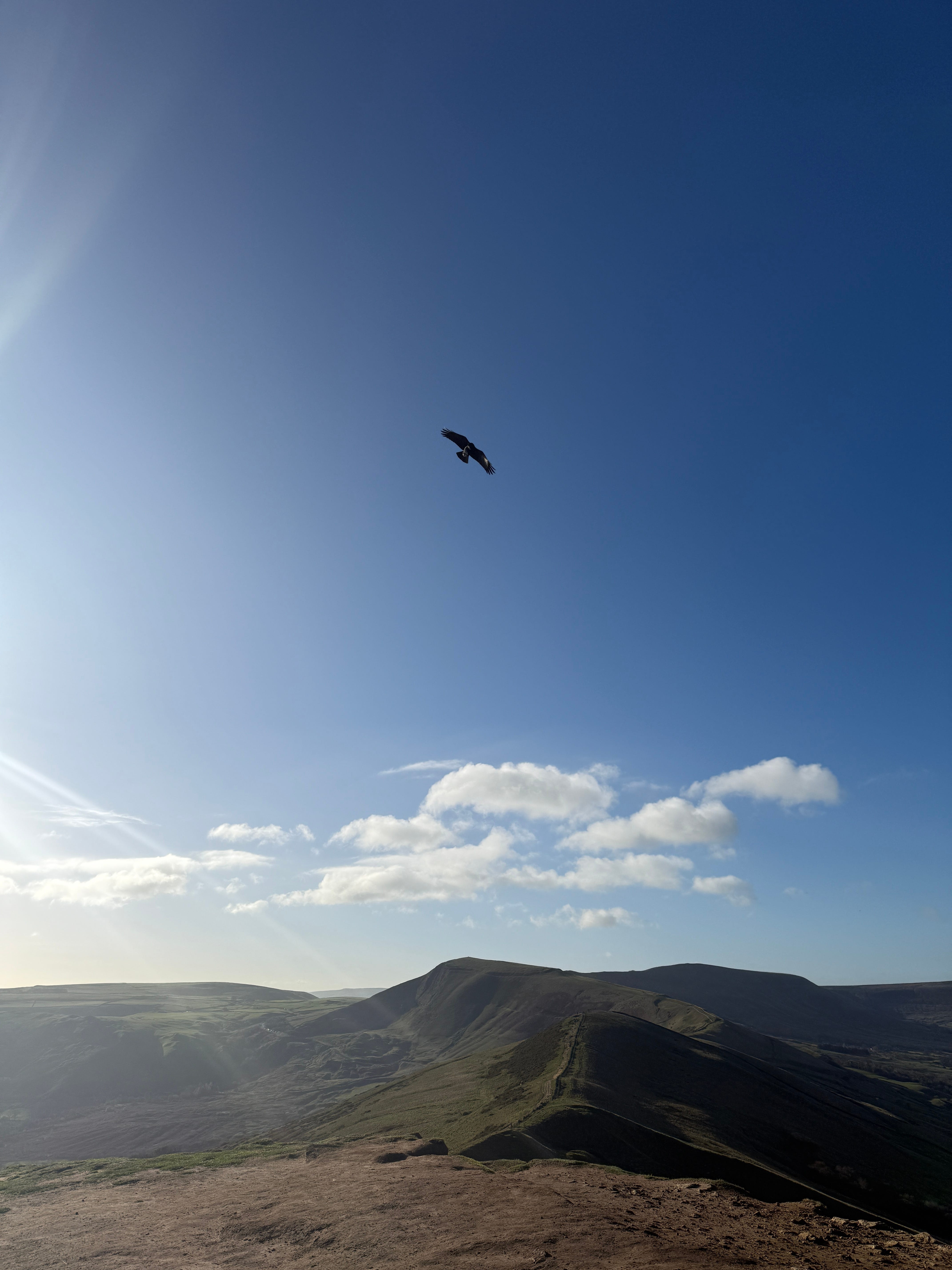
All around me are sloping hillsides, mountain ridges that dip and swoop like a swallow drew it with its wings. At the top of the hill the eagles perch on winds, gracefully almost-still, keeping their distance from us, observing curiously. It’s absurd that some people think we’re superior to creatures who can hold themselves in nothingness.
I think about how every bit of pain this world has given me is redeemed by the tenderness its mountains and lakes and coastlines and trees have shown me. I think about a Latino couple in LA who bought our meal after I pointed to the car keys they’ve left behind on their seats. I think about a man on the Tube who offered his finger to a crying baby to play with. I think about the 93 year old British lady I met while volunteering for the local charity, who got me daisies and sunflowers as a thank-you.
A video essay on Youtube talks about why movies don’t feel real anymore. It has to do with shots with shallow depth of field and highly made-up faces, blurry AI-textured backgrounds that lack grains and details, and, in simpler words, cinematic productions that contradict with how humans actually perceive our reality, that deem “watching” a purely visual activity. Quoting Laura Marks in “The Skin of the Film”, it argues that films are not grasped by our eyes and ears through a regular “optic visuality”, but by the complex perception of the body as a whole, the “haptic visuality”. Cinema is an embodied experience, where “the eyes themselves function as the organ of touch”, “not seeking to focus but to move, more inclined to graze than to gaze”. It is the exact framework in which I’ve been thinking about fandom and fanning, about the purpose and goal of a cultural commentator. I think about fans asking idols on stage to open their water bottle and splash it on them, to feel connected at a moment of impossibility and unreachability. I think about how it felt standing by the barricade and getting splashed by Mingyu of SEVENTEEN, the cold droplets against my burning skin.
We perceive the world not through medium close-ups but deep-focus long shots, panoramas, sweeping and visceral. Perhaps this is the way forward: to graze this world, all the grief and wonders it has to offer, and write something imbued with every single intricacy that has ever left an imprint on our being. Write to be perceived haptically. Write something real even as the earth burns and words are the only thing that remain.
Look after yourself Em. I know things are rough, but this was beautifully written. Keep going. The winters are way too long and miserable in the UK and the world is going to shit but things will get better, they will
Here's a virtual hug 🫂