

07. Stims
the 拼豆 craze and celebrities as fidget toys

Hi there. Welcome to Active Faults.
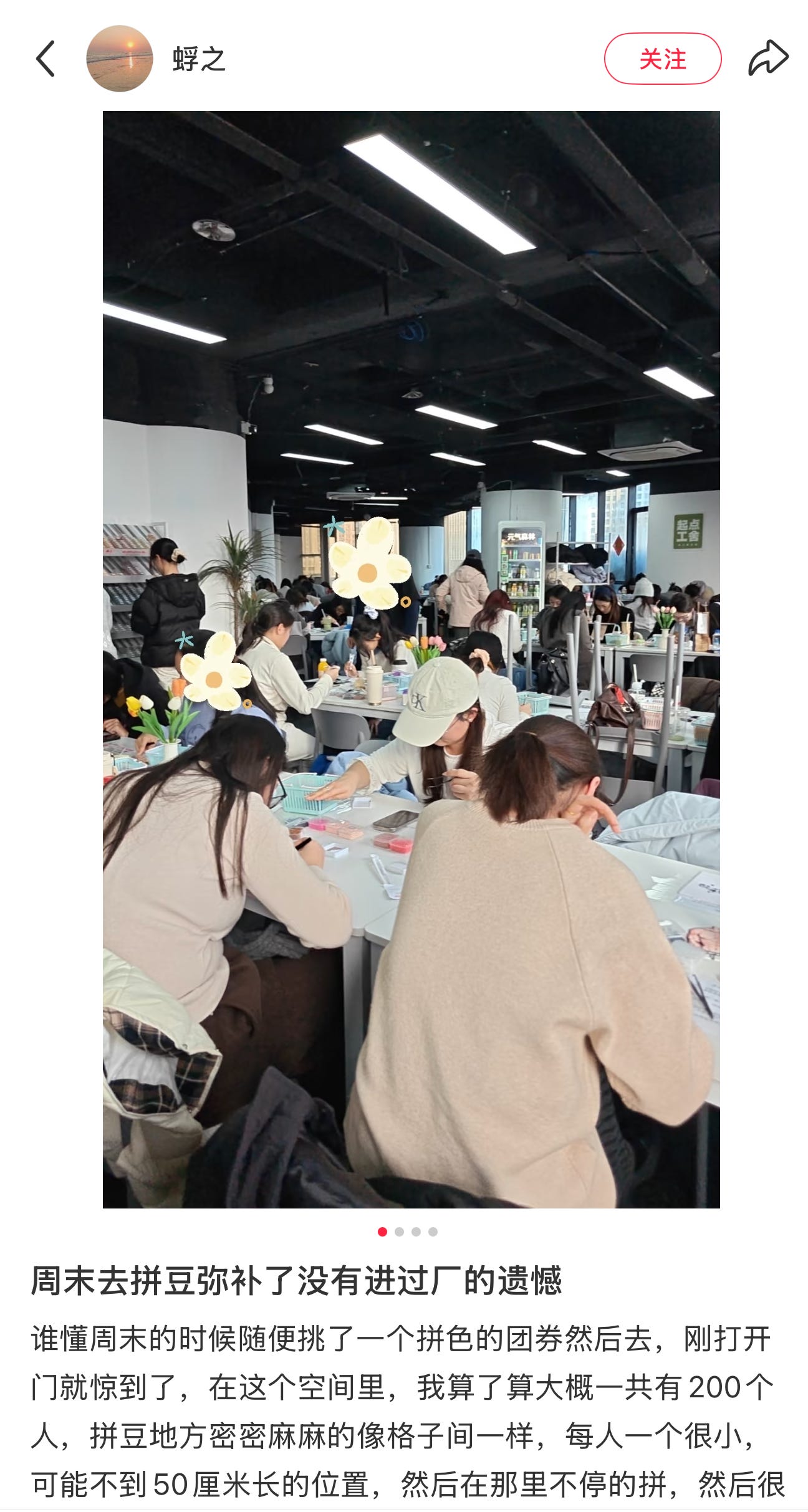
Picture a doorway rubbing shoulders with a T4 milk tea shop and a Pakistani bank branch on a busy London high street. The entrance is unmarked. The buzzer has no instructions or labels that could indicate what it houses. You realise this is a co-working space of some sort, with weird touches of graffiti on the walls to dampen the corporate dread. A completely unnecessary, eerily spacious industrial lift takes you up three stories. Then, down an unevenly lit hallway, you see a glass room full of Chinese hunched over their desks, hard at work. Silence of pure concentration except for a Douyin hit-song playlist. Behind them is a floor-to-ceiling wall of trypophobia-inducing colours: 221 shades of fuse beads in prescription-pill-bottles on hospital-style metal shelves. A man in an apron sits by it and guards the treasure with a too-warm smile. Untreated concrete underfoot. Strange steam rises from an even stranger machine in a Smeg Fridge finish, designed to look cutesy and innocuous enough to distract you from its monstrous whirrings. You breathe in aircon coolant and burnt plastic, get to your seat and get to work like the rest of the lot.
Today, let’s talk about the fuse beads (拼豆) craze in China and how, like every other trend, it unfailingly reflects a change in public moods and a new attitude towards entertainment.
For those of us who didn’t play this growing up, fuse beads (拼豆) is a children’s craft activity where you arrange plastic beads into patterns before melting them with a heated device to create a picture. It has absolutely enraptured the country in the past year and breathlessly evolved into a full-blown sector, where every leg up and down the supply chain has done the very Chinese thing of hasty optimization. Everyone of all ages including your distant aunt is either spending three, five, seven hours in a 拼豆 shop or opening one in a first, third, fifth tier city. My 12 year-old niece goes on these “拼豆 dates” with her bestie on the weekend. You can find the “blueprints” of any picture on Xiaohongshu, bring it into a shop and go ham.
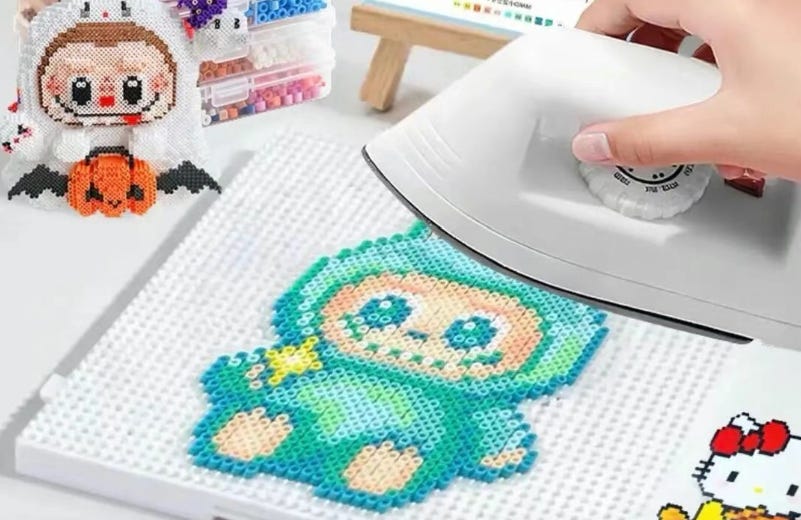
What I just described in the opening paragraph is one of the many shops that found their way into the international market. There are a couple in London already, with more due to open in other parts of Asia, the States and anywhere with enough of a Chinese population. I can imagine the startlingly low operating costs compared to the raw profits it will bring. Bulk buy and ship beads from the centre of the universe (Yiwu), rent out a co-working space, lightly furnish it with bead stations, invest in a heat press machine, hire a broke student to manage it and you’re all set. I was charged £25.99 for a 2 hour 30 minutes session there. You can pay double that to cover a whole day of beading, and many people do. Judging by the footfall I observed, the monthly revenue of a 拼豆 shop in London would probably be well over £10K during peak season (term times). That probably translates to a bigger margin than most tech ventures, let alone creative startups in their nascent years. It could easily be the most lucrative business in that co-working building.
I went to that shop several weeks ago feeling like a sweaty wreck, because this has been a summer of life-alteringly bad news and personal emergencies. I had heard a lot about beading and adamantly dismissed it as a waste of time, a sign of our AI-poisoned, sluggish society slumping further into apathy and inertia. The concept of it was comedic to me until I was one hour deep into my labour, and I was on the verge of flow state where the rest of the world disappeared. I felt calm because of the tunnelled vision—the fixation on miniscule components that requires minimal intellectual effort but maximum intent. It doesn’t solve any of your problems, but it crowds them out with thousands and thousands of tiny specks.
The populace of China and beyond is in need of precisely this kind of crowding out. We’ve reached a state of depletion and disarray where even hobbies and pastimes are too much, too loud, too draining. We no longer need a preoccupation or an interest, but something simpler and void of Meaning—what a bore that is. We need to be sedated with repetition, so that we can finally decompress and regain a sense of control. This would explain the universal hype of fuse beads across all age groups, because this desire applies to both wageslaves and exam robots.
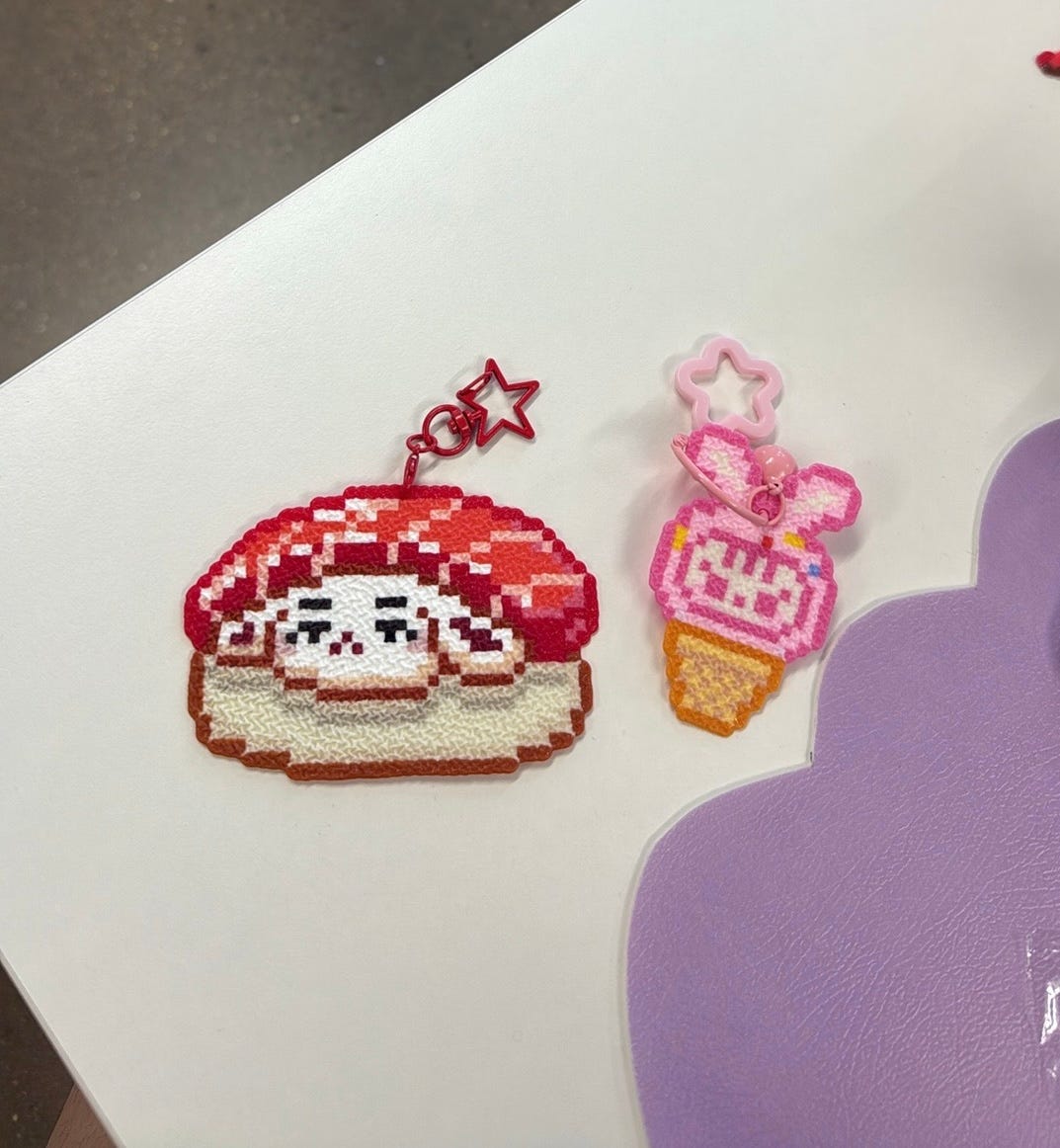
I made a tuna nigiri version of “Choitcherry”—a bunny representing S.Coups in the SEVENTEEN merch universe (try saying this sentence out loud). I also made “Jjongtoram” (Jeonghan) in an ice cream cone. Nowadays, a lot of 拼豆 works serve a “star-chasing” end. Celebrity fans would take blueprints to the shop and make keychains, concert freebies, slogans and signs to be held up at front rows. You can arrange the beads into lyrics, album covers, the faces of idols or even their bodies. On Xiaohongshu, there are lead “blueprint accounts” who are celebrities themselves. They are either digital artists who drew an original design and fed them into a software to generate a pixelated beading blueprint, or people who fed existing photos into the software and tweaked the result. The tuna nigiri S.Coups is obviously an original interpretation. But let’s delve deeper here: who owns the copyright of a piece of fused beads of a celebrity character? Who is the artist here? The consumer spent their own time crafting an object using the facilities of a retail space, based on an (illegally?) adapted and modified guide to a fictional character that bears some resemblance with another person. If management companies were to sue for violations of IP, which party do they even raise the litigation with?
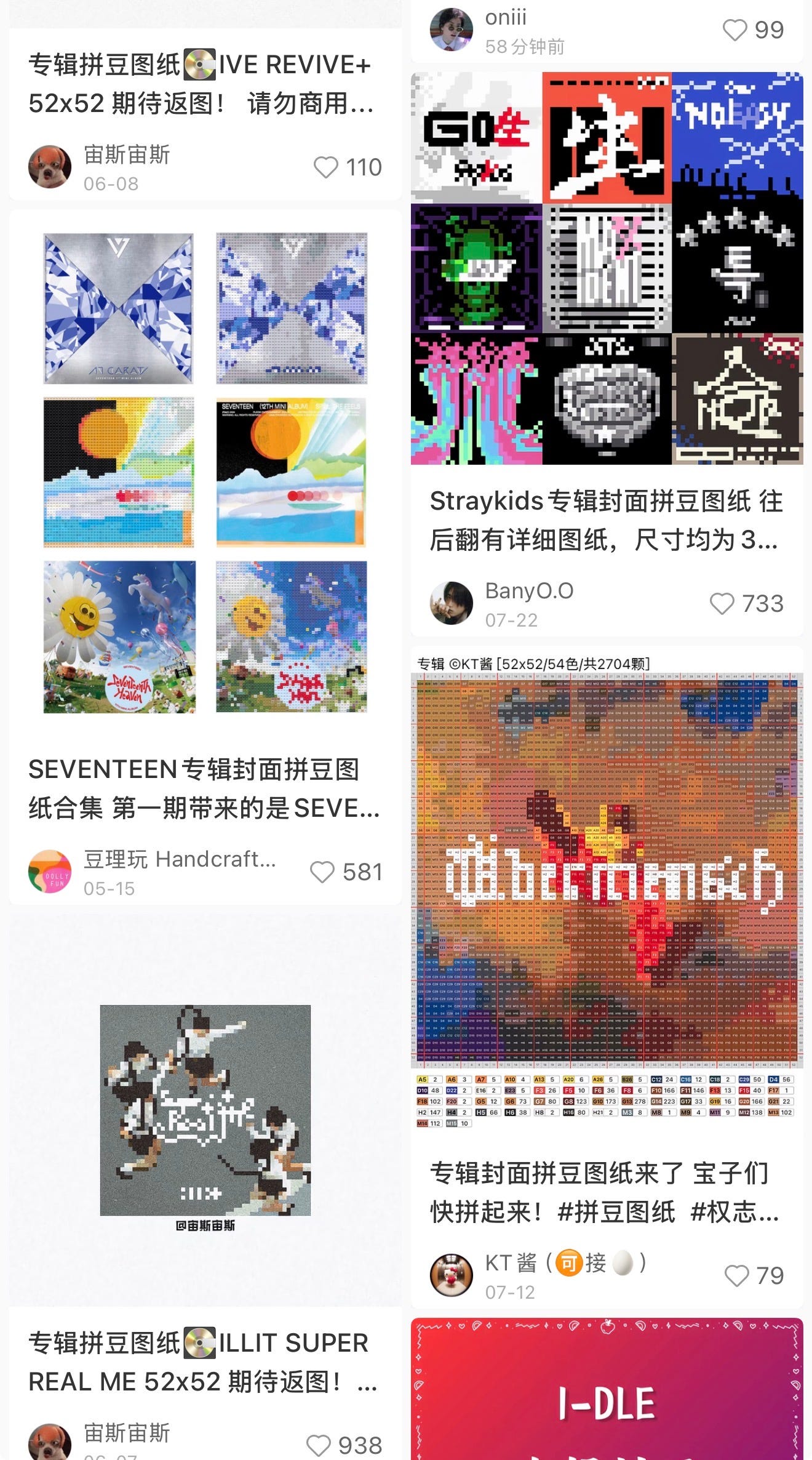
Because of this ambiguity of ownership, the practice of 拼豆 as fan labour carries less weight than, say, song-streaming, chart-topping or comments-controlling. These are solitary feats that add to parasociality. Beading doesn’t induce the same level of pain-exhaustion that leads to a heightened feeling of sacrifice and loyalty. I committed four hours to making what’s known as an “eye-strip” (眼睛条) of S.Coups. It’s cute, but it gave me vertigo, a self-mocking laughing fit and an irritating task of purchasing a special picture frame to display it. The output is almost always underwhelming, grossly disproportionate to the work you’ve put in and the investment you’ve made.
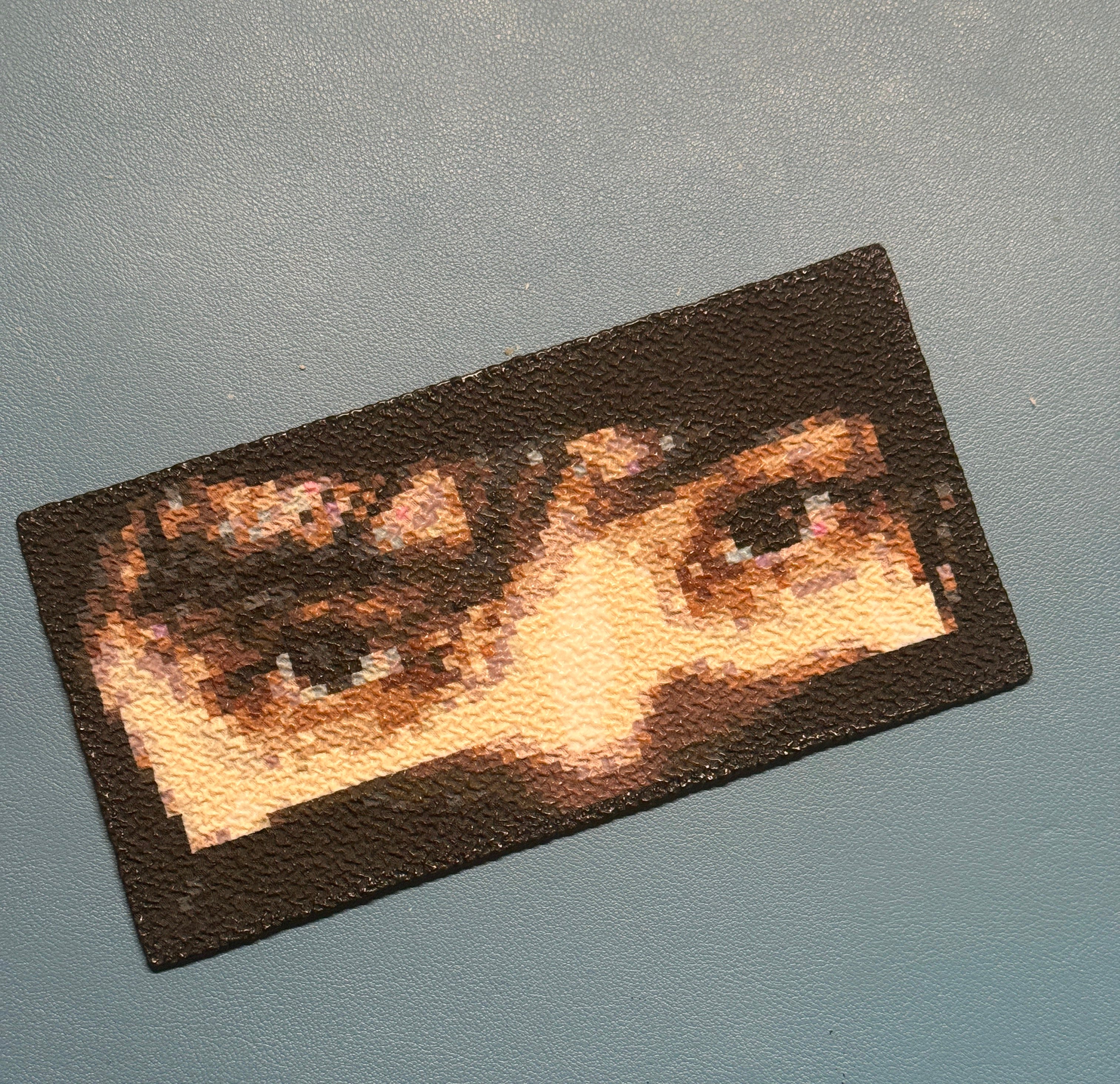
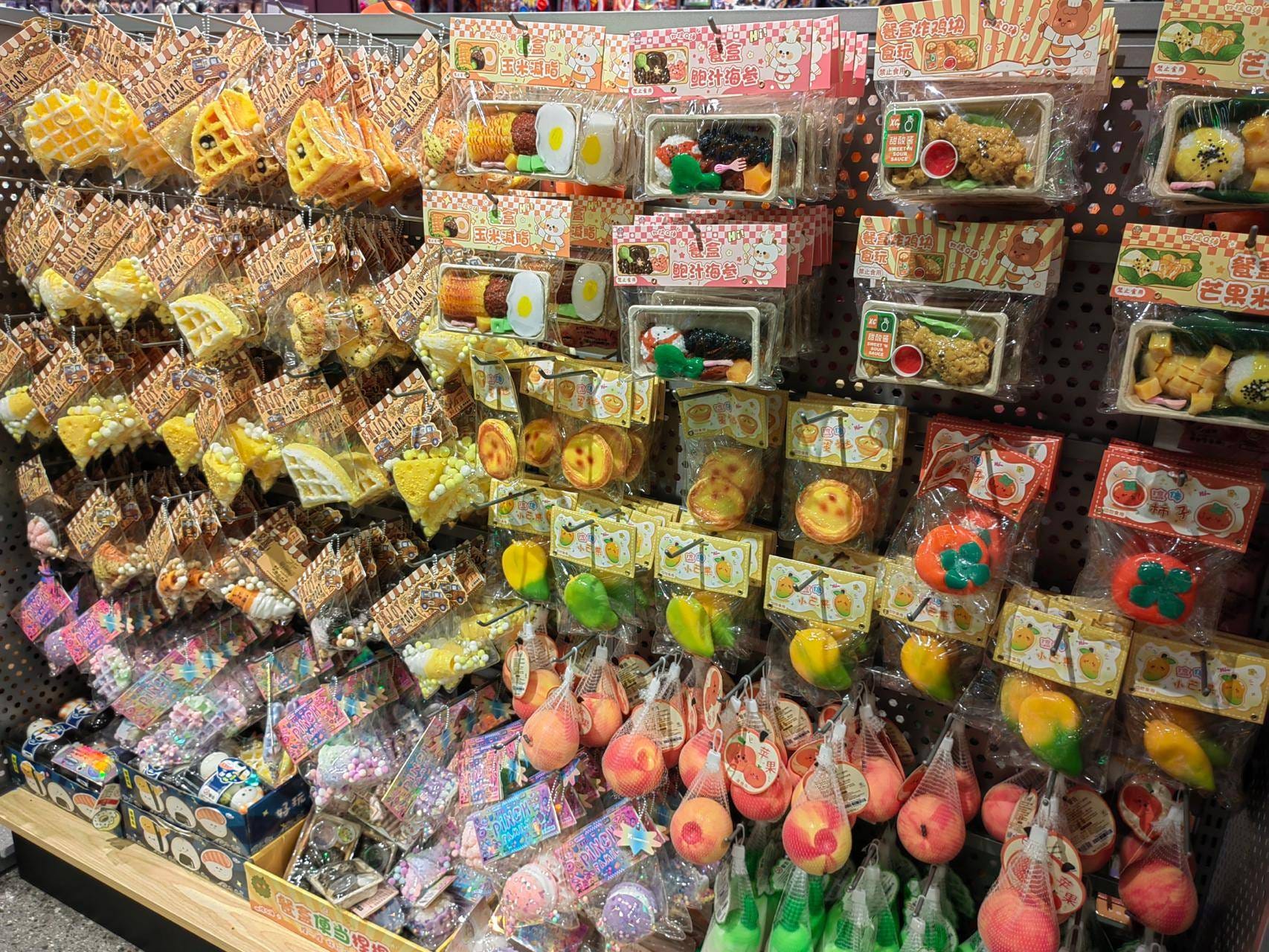
Hardcore beaders would argue that the process is where it counts. 拼豆 functions like a baby mobile—a provider of calming stimulation for the restless masses. Zoom out a little and you’ll find that fidget toys or “stimming” toys have been trending on Chinese social media for quite some time. Squishies (捏捏), or portable slime, have grown from a children’s plaything into an adult stress-relieving sensation. There are now full blown 捏捏 stores in shopping malls where colourful slime shaped into anything from cheesecakes to oranges are packed into plastic pockets and sold for extortionary prices. My 12-year-old niece would be their prime target. But so are my friends in our late twenties because we’ve got adult money to spend—one of them have splashed at least five or six digits on it. Tangle, a U.S. brand specialising in squiggly fidget toys, have a fuller stock on Taobao (via resellers) than its official website. There are fluffy ones, sparkly ones, colour-changing ones and spiky ones, the endless iterations “stimming” comfort in low doses but consumption in high intensity.

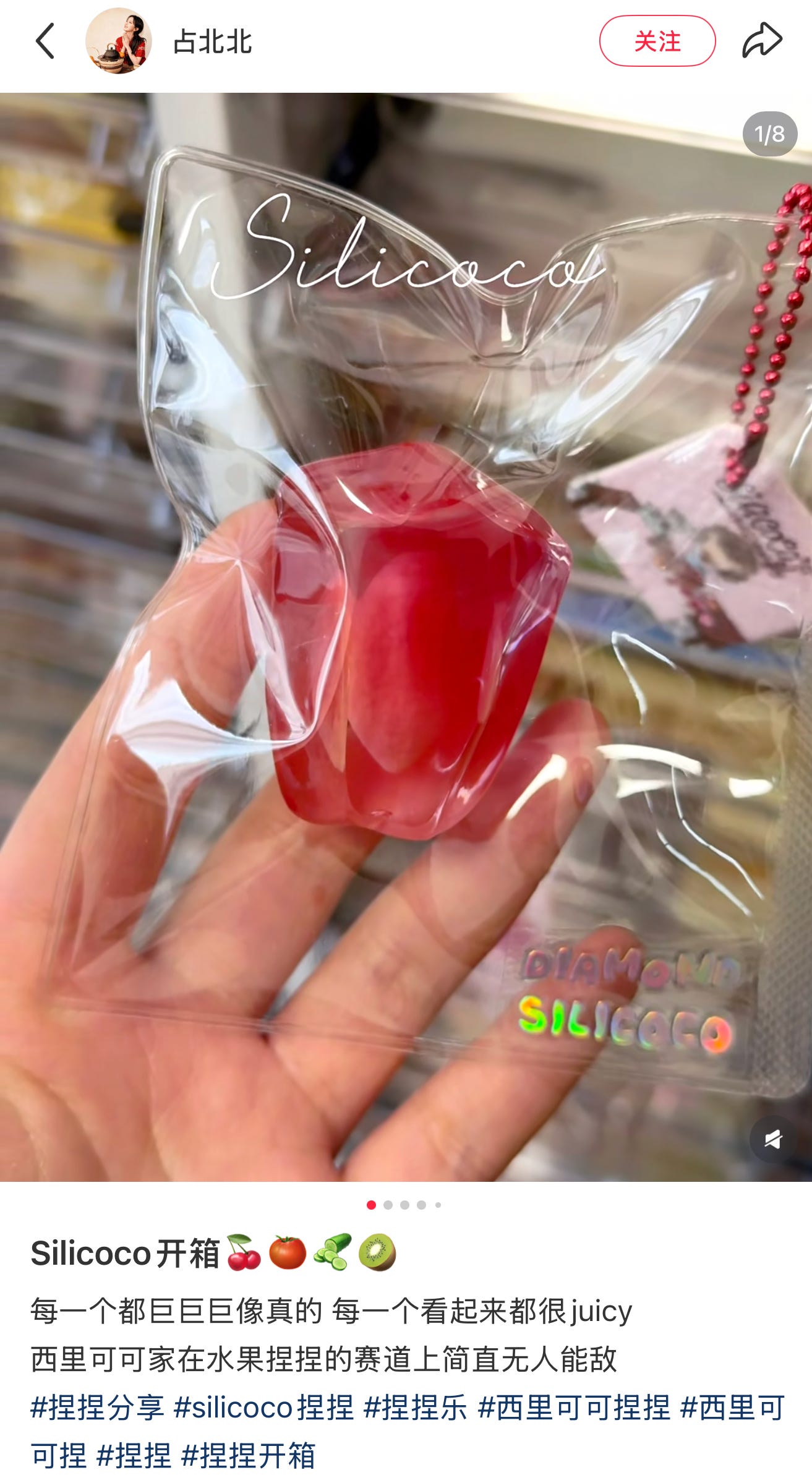
What does this dichotomy mean, then, for celebrities and entertainment? Fuse beads and fidget toys are vying for the same demographic neiyu does. Both industries are preying on the attention of young(er) women, who are now subconsciously treating the two as indistinguishable. Toys gain celebrity status and the community becomes fanquanised, while idols are deemed as “stims”. Some squishie brands on Xiaohongshu have tens of thousands of followers. One of the most renowned, Silicoco, has a month-long waiting lists for rare, limited edition squishies, like this…jelly-looking thing.
On the other hand, celebrities are increasingly dehumanised and treated as playthings, where hostility keeps escalating into microscopic scrutiny. I wrote about the downfall of Wang Hedi and Bai Lu in the previous issue.
2026 Idea Dump
AF just went on its annual summer break in June, and I spent the most glorious two weeks up north for some much needed, off-the-grid time. One of those weekends I completed a mountain skills course in the Dark Peaks, scrambling up cloughs and gulleys, scraping my palm against the gritstones, stinging nettles and heather fields. We learnt this navigation…
In the past couple of weeks alone, I saw another celebrity, Zhang Yaqi, receive the same treatment over her behaviour on “中餐厅”, a reality show where celebrities run a Chinese restaurant abroad. It started with one of her hair styles on camera that appeared way too elaborate and “try-hard” for a programme about food and Chinese culture. It then became a dissection of her workload compared to other stars, the way her castmates were subtly fuming over her “privileges”, and her general incompetence in life. Every second of her airtime was slowed, rewinded and criticised. A top-voted comment said there should be a show starring Zhang Yaqi, Bai Lu and Zhou Yutong, and they will have a “rude-off” to see who’s the most problematic. I won’t pass my judgement on their characters, but I do want to highlight this widespread urge of fault-finding and cancelling. Like fuse beads, the joy for the public seems to be in this motion of dissecting footage, in the tedium and the cycle itself.
Another example is a neiyu ship that has garnered so much attention I’d call it our “Hollanov”, with the scale of its industry takeover and the extremity of fan behaviours. “Lumu” (橹穆) refers to two boy idols owned by TF entertainment, 王橹杰 and 穆祉丞. The ship started sometime last year when one of the boys was mobbed at an airport by fans. As he got into the car that was surrounded by cameras, his phone got activated with the motion and revealed a lock screen photo of the other boy. His fans were dumbfounded. They had no onscreen interactions prior to this Canon Event, no rumoured friendship, nothing to warrant the keeping of a photo let alone a lock screen. They later found out that the photo was a fan club exclusive, meaning it was a paywalled selfie. It all spiralled into an “unrequited love” storyline, a spicy and epic tale filled with desperation and angst. Fans swooped in to dig up more evidence and clues, disregarding the fact that they are already violating the privacy of minors and sexualising them.
To me, it was one of those moments too perfectly “coincidental” it feels orchestrated. At least it became more and more of a company-led marketing campaign as time went on, and management caught a whiff of extraordinary profits. In recent months they have been paired together for content and played flirtatious games on camera, and by July, one of their couple merch sales reached 50 million in 48 hours. For context, fans of Liu Yu bought him the Produce Camp champion in 2021 with around 40 million crowdfunded over months. Fast forward to five years later, repetitive purchasing and overconsumption has stopped being altruistic. It has become self-satisfying “stimming” and thinly veiled violence against celebrities to bend them to your will.
This is what happens when you sell fidget toys and idols to the same group of people. Baseless, repetitive aggression is launched at both for pleasure and relaxation. What’s even more interesting is how the entertainment industry is playing into this misalignment. K-pop has been filled with, for the lack of better words, unrelenting noises. I-dle wrapped their music show performances of “Gimme Dat Love” with 0 trophies to no one’s particular surprise, since the chorus of that song is a continuous chant of…the song title. KATSEYE’s Ed Sheeran-backed single “Animal” has a choreography with barely any variations other than claw-hands. The biggest controversy recently was CORTIS’ concert in Korea, where the gig ran for only one hour and forty minutes on a repeated setlist. The much-ridiculed “Young Creator Crew” was played five times, as well as “REDRED”, their other monotonous global hit. Songs from their debut album “Go” and “Fashion” were played three or four times, while the members had no costume changes, no stage designs, no back up dancers or special performances. A Korean fan summarised it perfectly: it was less of a concert but more of an opportunity for a bunch of teenagers to play house, pretending to be superstars to a crowd who already thinks of them as playthings and puppeteers.
The industry benefits from repetition because innovation is costly and risky. REDRED is done for the same reason why Disney kept milking the same IP by producing sequels and live actions instead of writing new stories. When that risk-aversion becomes too flagrant, it will be received as laziness. A lot of CORTIS fans were outraged at the blatantly perfunctory and extractive nature of the show, especially considering its price of 150K won per ticket minus travel costs. What made matters worse was how day 2 audiences got an apology show that ran for longer, with 7 more encore songs and much more heart-felt speeches by the members. The phone ban enforced on day 1 to echo the tour title “put your phone down” was promptly removed for day 2 as well. The rapid turnaround reminded me of Harry Styles changing the stage design mid-residency to reflect fan feedback, but again I ask: what about day 1 fans who paid the same for a shittier experience? Where were you before the show opened? No wonder Chinese CORTIS fans have started encouraging “停氪”, i.e. halting expenditure, especially after HYBE’s racist shaming of two Chinese saesangs by specifically revealing their nationality in an official notice.
But here’s the fine line between repetition done wrong and incredibly right: whether there’s an element of gambling in the mix. A repeated setlist is not unprecedented. SEVENTEEN is known for their “infinite encore”, where the same section of the same song will be played for 7 to 20 times. But the difference is each time the members would pretend to leave the stage, before rushing back out to surprise the crowd again and again. Throughout the years, they’ve modified this segment to invite fan renditions, thus creating more unpredictability, improvisations and comedic effects. You don’t know which performance will be the last. Imagine the “stim” of that loop, the repetition of disappointment-elation constantly pumping dopamine into your system, the lingering anticipation long after the show has wrapped. That element of gambling excuses the repetition completely.
The same goes with photo card collecting or tour-hopping. We don’t talk enough about how a lot of “extreme” fanning is boring. It’s a chore, a tedious repetition of actions while expecting better outcomes. You’d constantly see “站姐” or fan photographers complaining about how numbing it is to attend a mediocre concert twenty times. You’ll yawn through the same routines waiting for a blip, an exclusive song or even a note change, and that high will sustain you until the next cycle starts.
This is why modern romance dramas have adopted the same pattern: alternating filler scenes and intimacy scenes. The filler scenes serve virtually no purpose other than being the buildup that everyone tunes out, the drag to amp up the suspense. They are the individual beads you line up in a fuse bead shop, sedating you before the release. Then, the intimacy scenes will hit like hard drugs and be replayed from five different angles to amplify the impact. There are two simultaneous loops here, the smaller circle of replays and the bigger circle of filler-intimacy. All of the used and unused takes will be turned into five hundred Douyin reels intermittently microdosing the fans and keeping them on that high. Sexual tension is no longer inherent in the casting choices and the chemistry between the leads—it’s entirely constructable with enough repetition. Recent examples include Pursuit of Jade (逐玉), Never Ending Summer (炽夏), First Frost (难哄) and Love For You (野狗骨头), all substantial hits with international audiences and viral clips circulating on Twitter. Romance dramas have never been this formulaic, not when I was growing up in the age of dramatic 偶像剧 full of plot twists and intense conflicts. That’s way too uncomfortable now.
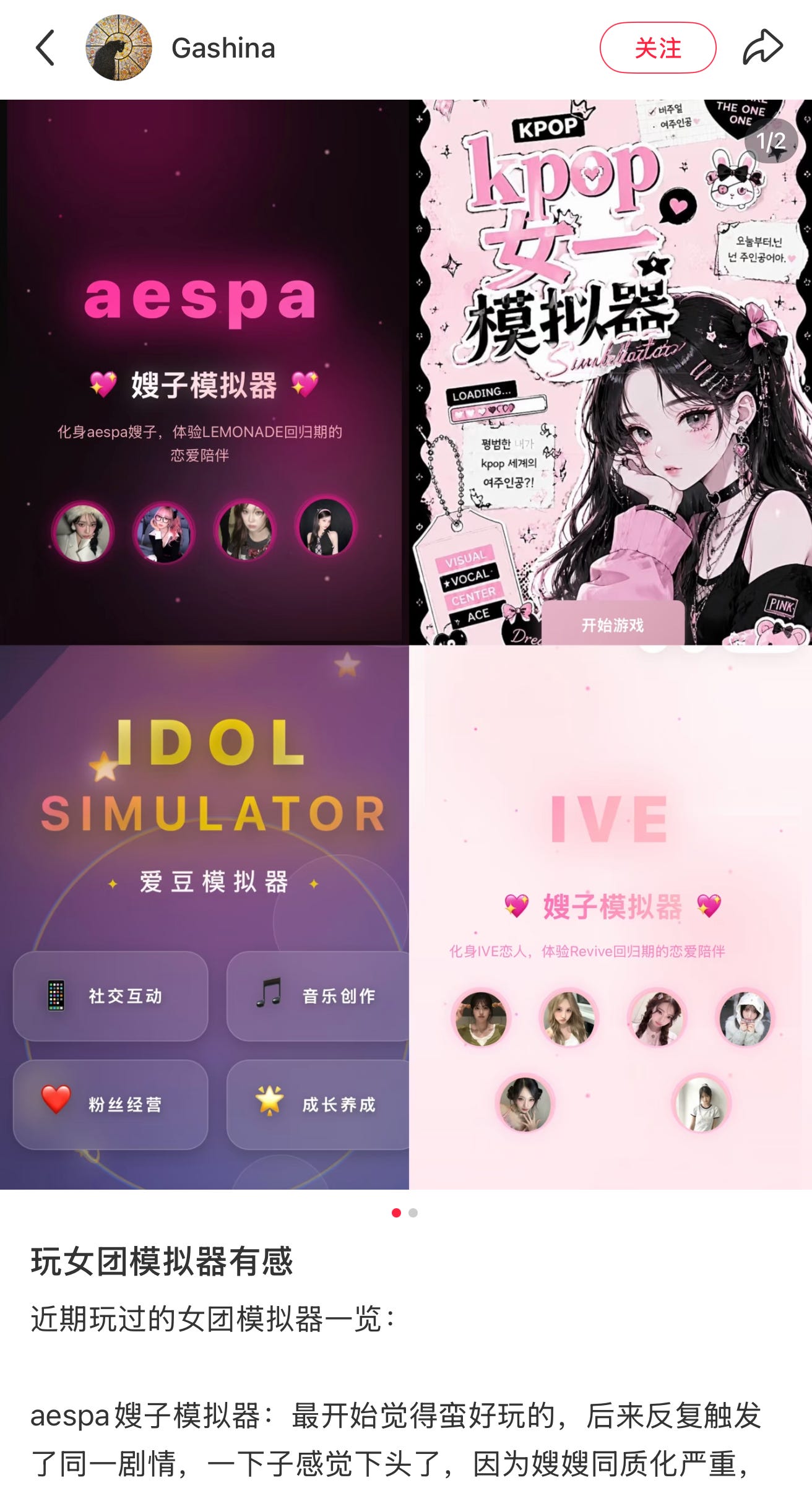
But what does it mean for society as a whole if all we can stomach is repetition? One possible answer can be deduced from my Xiaohongshu algorithm that has been pushing me to “simulation sites”. Nowadays, you can become an idol’s girlfriend through a simulator (I suspect it’s AI powered), where you can pretend to text him/her or post cryptic soft launch photos on fake “social media” interfaces. There is a growing range of simulators to choose from, from a actor’s side piece to an idol trainee who’s secretly dating a hot guy within the company. It gives you a series of scenarios and options where the storyline might diverge, much like how otome games work. Of course, some of the most premium simulators are paywalled. I invested a whopping 6 kuai for the full access, and got bored of it within a minute. These slop sites are meant to endlessly feed your ego and contain no real stakes or dilemmas, nothing concrete except for a sense of meagre autonomy. Similarly, I’ve heard that “dopamine sites” have become a thing in South Korea, where you can pretend to fill your online shopping cart without paying a penny. Black Mirror is going to become a documentary any time now.
Wow, first time reader here! this is a very astute breakdown. as someone who's not from china, it sounds very familiar too. I was never really aware of this level of manufacturing that goes on behind the scenes of asian entertainment and media, and the extent to which fandom culture is profited from - my activities as a fan are usually restricted to the internet so, that part really struck me. celebrity culture really does generate a lot of money. :0 reality keeps becoming more unreal. thank you for writing this!
"This is what happens when you sell fidget toys and idols to the same group of people. Baseless, repetitive aggression is launched at both for pleasure and relaxation. What’s even more interesting is how the entertainment industry is playing into this misalignment. K-pop has been filled with, for the lack of better words, unrelenting noises. I-dle wrapped their music show performances of “Gimme Dat Love” with 0 trophies to no one’s particular surprise, since the chorus of that song is a continuous chant of…the song title."
You've perfectly explained my problem with a lot of new K-Pop releases. They're built around one or two memorable soundbites with no sense of song structure, melodies, or build-up. Great article!