

05. Labour
motherhood and entertainment

Hi there. Welcome to Active Faults.
Recently a female friend sent me a video of the actress Tang Yixin revealing for the first time that she suffered from a mysterious postpartum skin condition. It led to significant and seemingly incurable facial deformations and forced her into a four year hiatus. Weibo was understandably shocked, as her disappearance got misinterpreted as laziness considering how prolific she was before she got married. Then, discourses about complicated pregnancies and childbirths started to float around and women started sharing their survivor stories: what Tang had to go through was not that rare of a struggle. My friend, however, had a different point to make: “how is it that social media and celebrities are our sources of information on postpartum recovery?!” And here we are.
Today, let’s approach neiyu from an often neglected angle and talk about motherhood in entertainment.
We start by defining the scope of this issue by what it is not. It won’t be a piece that unpacks the visual representations of motherhood in televised works. It is also not a piece that compiles and sheds light on self-expressions of motherhood, like the one made by Tang. I would much rather focus on the surrounding terrain in which motherhood is evoked against the backdrop of celebrities and fandom culture. How do fans and netizens react to pregnant entertainers? How is childrearing framed and discussed by reality shows? How is entertainment used to manufacture a baby craze, hence attempting to manipulate birth rates and demographical politics? And fascinatingly, what are the men doing in the midst of it all?
Tang Yixin made her confession as a contestant on the latest season of Breaking Waves, a xuanxiu for mature female entertainers that made a huge splash with its girlpower messagings when it debuted. By revealing her struggle, she wanted to raise awareness for what’s so often silenced, the real depths a pregnancy could plunge a new mother into that could sabotage a career. Many celebrated her brave move. I do wonder, though, whether a wanghong or a non-famous mother would receive the same amount of acclaim on the Chinese internet for potentially discouraging pregnancy, and marriage or relationships by association. After all, this is the same internet that banned the Uyghur standup comedian 小帕 after she made a post about her flu. She said her fever ran so high she was in bed for two days, and if she had a husband and a child, she would’ve needed to get up by now to cook for them. This factually and universally accurate joke got her Weibo account suspended, the platform citing reasons of “flaming marriage anxiety” (渲染婚姻焦虑) as if the state of the society was not already doing so.
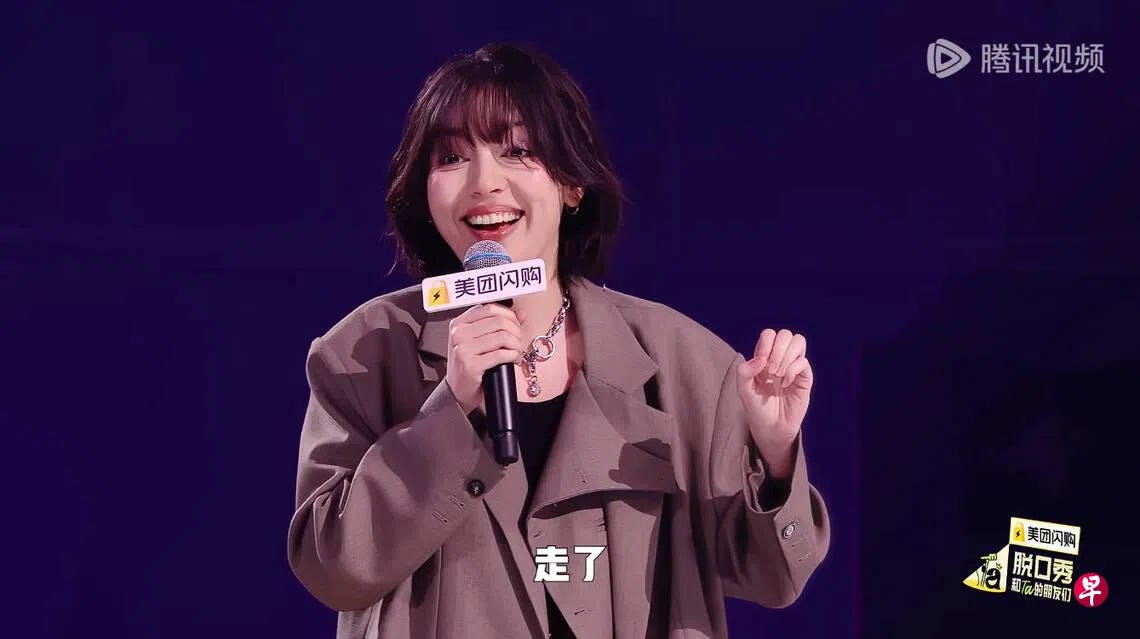
Female celebrities are certainly more licensed to be engaging in conversations about their bodies than the average woman, because Chinese entertainment is painstakingly concerned with it.
09. Marinated Raw Crabs

Hi there. Welcome to Active Faults.Active Faults is a reader-supported publication. To receive new posts and support my work, consider becoming a free or paid subscriber.
If they’re constantly talking about sizes and body weights and diets, they might as well be allowed to talk about gestational diabetes. Somehow, the pathological, voyeuristic attention paid to their physical appearances has given them more liberties to broach the topic, and even be expected to do so. The tension is that their opinion must not overstep and risk deviation from the “main melody”, or else you become the next 小帕. It also lies in that they are consumed and scrutinised for their femininity, and if they highlight debates around motherhood, their commentaries get reduced into gossip and tabloid materials in an unhelpful way. Then, there’s the issue of whether she was even in the position of raising awareness, considering the medical support she received would simply be inaccessible to the majority. Ultimately, they are not incentivised to participate in constructive advocacy, because their fame depends upon idealised femininity that implies meekness, submission and silence. The reality is that they are a lot more driven to supply lukewarm takes and “untold secrets” about motherhood, which attract a fair amount of buzz and capital gains without tarnishing their image. Motherhood becomes instrumentalised and discussions about reproductive choices stop short at the crux of change.
Then, there’s also the parenting side of things. I’ve written about “育儿节目” before, a specific genre of reality TV that zooms in on childrearing celebrities as well as their nuclear, heterosexual households politics. The once popular “Where Are We Going, Dad” (爸爸去哪儿) was modelled after the South Korean original and received astounding viewership in the early 2010s. All of the kids on the show went on to become second-generation celebrities themselves. As a teenager back then, I was not the intended audience and while I still caught glimpses of the programmes, I could not care less about them. In hindsight, I can pinpoint my exact qualm with the concept: it is an apologia for the fumbling, ignorant and entitled celebrity dads so that they can get away with their (weaponised and capitalised) incompetence. Their parenting flaws were “cutesified”, downplayed into innocuous mistakes to evoke the audience’s sympathy. It was meant for us to watch and say “aw, at least they’re trying”.
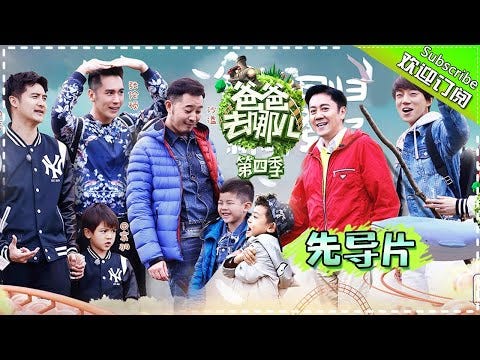
If you contrast the undertones of dad childrearing shows and its public receptions with mum childrearing shows, the differences are drastic. “Where Are We Going, Dad” was concurrent with “Super Mum” (妈妈是超人) - I’ll let you read between the lines from the programme title alone. The latter ran from 2016 to 2018 (sharing the same production team with “Dad”), featuring famous actresses who tried to balance their careers with domestic labour. The show was filmed, edited, broadcasted and reported to frame celebrity mums as objects to be micromanaged. Here’s a paragraph from a Sohu review on Super Mum:
冉莹颖的干练收获一片好评,但轩轩和皓皓的相处让网友担忧不已,此外“生活白痴”的梅婷照顾快快时的大意、董洁对顶顶的严厉、顶顶偷吃糖果被骂等都引起网友关注,同时贾静雯修杰楷的甜蜜互动也让人羡慕不已[...]
Ran Yingying’s competence received a lot of positive feedback, but the way Xuanxuan and Haohao [her sons] interacted with each other made netizens worry. Other than that, “domestic life idiot” Mei Ting’s carelessness when taking care of Kuaikuai, Dong Jie’s strictness towards her son Dingding and the way she scolded him for sneakily eating candy were all noteworthy. Jia Jingwen and her husband’s sweet interactions made people want the same kind of romance.
This is how “Where Are We Going Dad” was covered in the press:
更多感动的记忆在录制《爸爸去哪儿》第一期节目中纷至沓来。“很难想象光鲜亮丽的明星,为了孩子能够做到这种极致。”谢涤葵透露给记者一些花絮,“林志颖为了给儿子争取到最好的早餐材料,天不亮就去村口守着等发粮,整整等了近三个小时。”跟别提其他父亲为了孩子自己生火煮饭、赶羊挤奶。“还记得有位父亲第一次给女儿扎辫子,一遍又一遍,总算把马尾绑好的时候,他自己都激动得红了眼眶。”谢涤葵对于这个父亲的印象深刻。
在这些点滴的细节中,围绕在明星身上的光环一点点褪去,而还原到爸爸身上爱的力量却越来越壮大,“在节目中,每一位父亲都只是一切只为儿女的普通人,他们没有觉得自己是在参加一个节目,而是和儿女一起经历人生中难忘的一次亲子历练。”在节目录制中,导演组用镜头记录下了父亲的爱和痛,快乐和眼泪,还有种种发生在父子父女之间的故事,“每一个镜头咀嚼起来都很有意思,更加特别的是我们节目邀请的嘉宾来自内地和港台,不同的教育方式和理念也在节目中碰撞,相信每个有孩子的家庭,都能在节目中找到自己的共通点。”
制片人谢涤葵告诉记者,“我们希望节目播出后,观众能从节目中收获一些,感悟一些,让亲子之间的关系沟通顺畅,感情更紧密,这就是我们节目所要传达的正能量,也希望这种正能量,感人心魄,直抵人心最柔深处。特别是在最近公众人物频频离婚,很多人对爱情婚姻和家庭失去信任的时候,希望节目能产生一种呼唤真爱和真情回归的力量。”
I don’t even want to give a piece of blatantly biased reportage any more air time, so I won’t translate it in its entirety, but the native speakers will be able to feel the preferential treatment in seeping through the subtext. It’s all about creating “touching memories” with your beloved child, sacrificing yourself, shedding the celebrity aura and becoming an “ordinary” dad with ordinary “love and pain, happiness and tears”. What made me laugh especially was the example they cited where a dad couldn’t tie his daughter’s hair in a pony tail, and tearing up after many failed attempts. Perhaps I should feel relieved that 10 years ago this rhetoric would’ve totally hit a soft spot and it was enough of a sell, but it simply won’t do in today’s day and age.
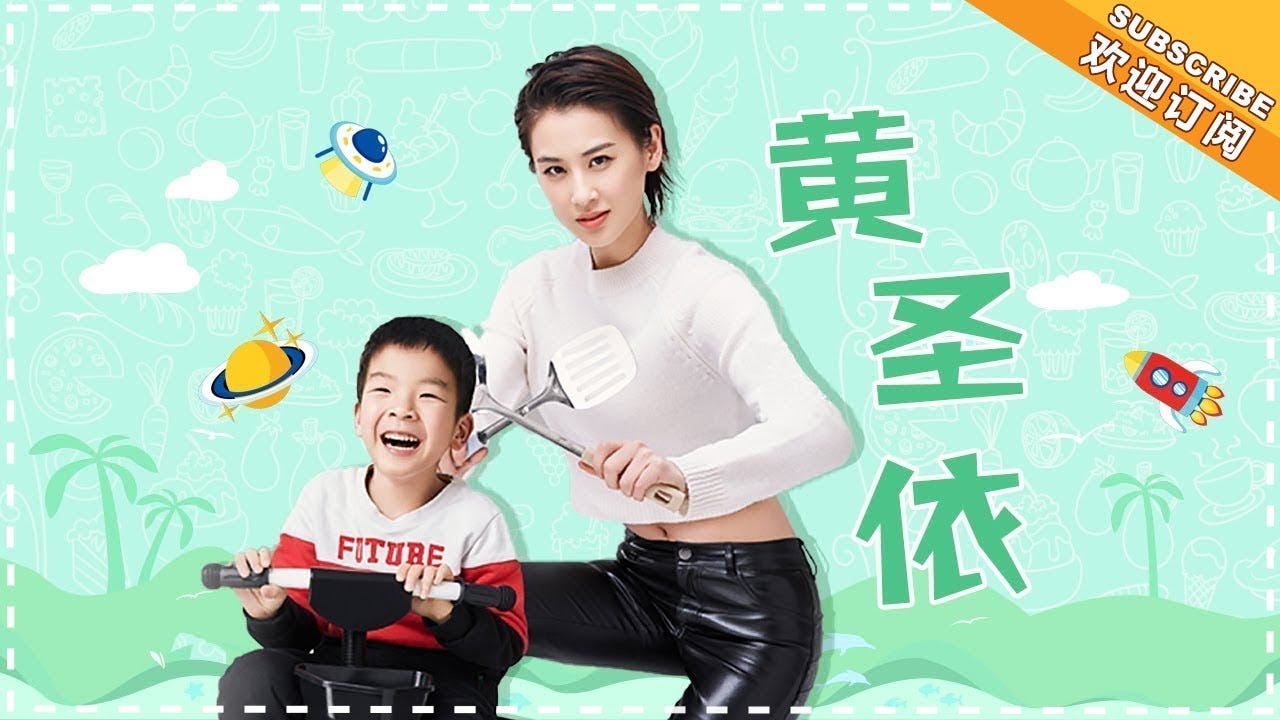
“Where Are We Going Dad” was all about “positive energy” (正能量), “spreading true love and rebuilding people’s faith in family, marriage and relationships”. “Super Mum” was all about competence, oversights, sweet romances, and netizen interventions. Dads were meant to be excused and Mums were meant to be policed. It’s not surprising, then, to see that female celebrities nowadays are carefully choosing their words when they’re speaking about pregnancies and motherhood. Other than Tang, I can barely think of another woman who addressed the topic. Their expressions will be received in this context where celebrity motherhood has been put under a magnifying glass for a decade, and it is a powerful deterrent.
People’s Daily’s coverage of “Super Mum” just read like horrid natalistic propaganda, which I’m not surprised about. Hunan TV’s goal with “Super Mum”, according to them, was to arouse the society’s identification with the role of the “mother” and the “woman”, while “rekindling the innate anticipation and desire for motherhood within every woman and embracing our nature of mothering tendencies”. Andrew Tate much?
I also would not be surprised to see such arguments and phrasings reappear in headlines as we join Japan and Korea in negative population growth for the fourth year in a row. The rate at which new births fall is getting faster and faster, and you see the panic everywhere. Restrictions on marriage registrations and pregnancies are all but nonexistent. You can get married in a city different to where your hukou is located, which was strictly forbidden in my memory. You can claim all kinds of government subsidies as a family with a child, and pay a reduced tuition if you have more than one. None of it worked. In 2023 alone, more than 5600 primary schools went bust. In the northeastern region where my family is from, 60% of early years institutions shut down between 2013 and 2022. In rural areas, schools of all stages are going extinct in entire towns and villages because there aren’t enough kids to fill them. You would think that now would be a good time to air some TV shows about cute babies, but it would achieve the exact opposite.
People, especially young women, are acting like teenagers when it comes to pro-birth sentiments: the more you try to push it down our throats, the more we gag against it. “偶像剧”, the chick flick romance dramas are already on the decline, and even when they do enter our peripheral vision, the “happy endings” would no longer feature a wedding or a baby like they used to. Verbal allusions to marriages and motherhood, let alone actual portrayals, are rare to come by in the scripts of TV shows. Instead, we’re seeing a stretched-out “flirting stage”, slowburns, back-and-forths and misunderstanding scenes between the leads that last well into the final episodes. We’re seeing working women, childless “leftover women”, corporate weapon women and successful, educated, self-assured women loving freely and refusing to bear the burden that might come with it. In the case of the internationally viral “Pursuit of Jade” (逐玉), the heroine literally got on her army-general-husband’s level and became a female general herself. Neiyu has played it smart. It understood the reigning mood a lot better than national media and politicians, which is that pro-birth cannot be forced anymore. We’re in the age of the “Big Female Lead”, “大女主”, and you cannot distract the Main Character with a childbearing side quest.
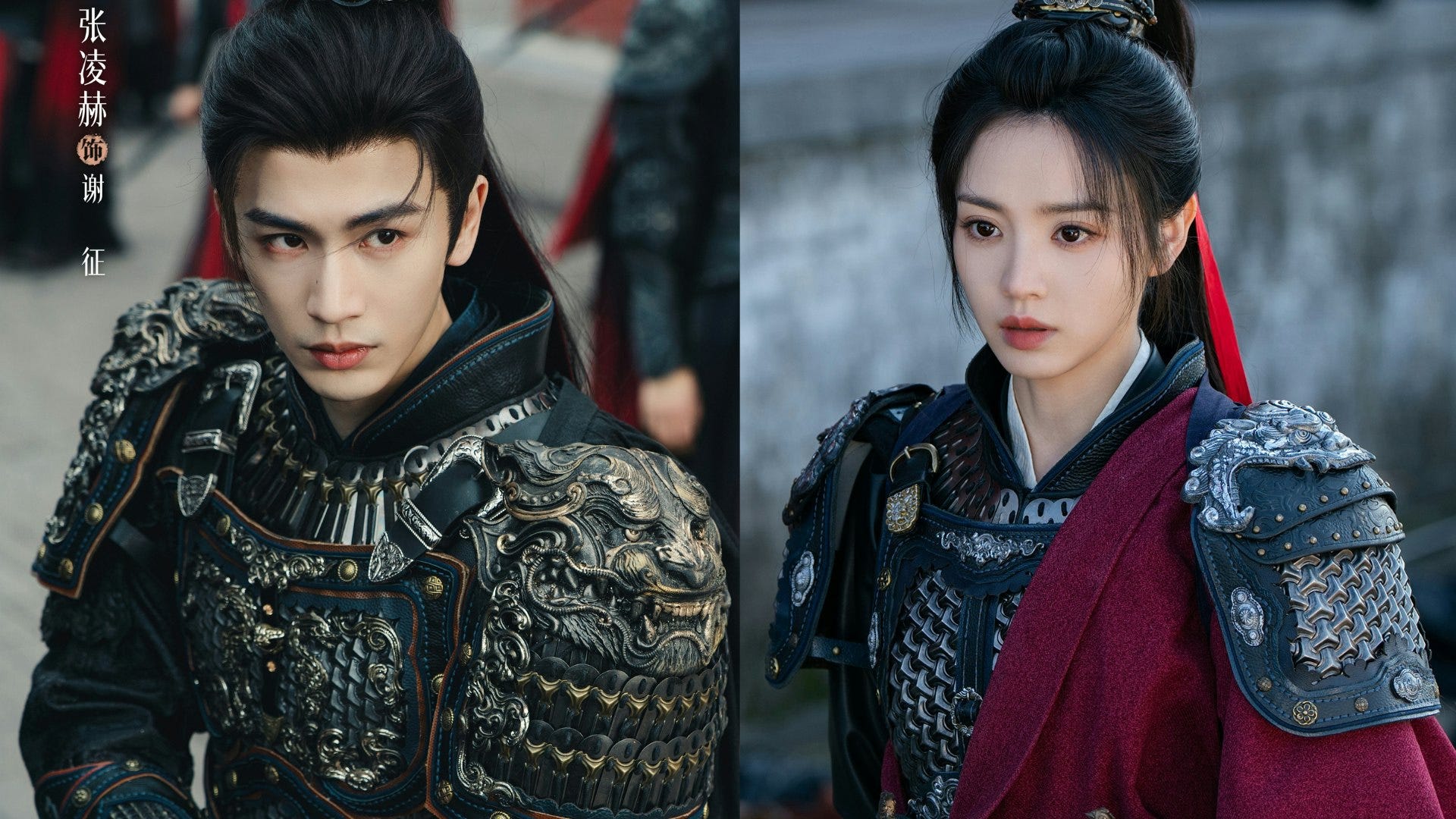
On the one hand, the “Big Female Lead” age is welcomed, because I think you do need to overcorrect a little after being coerced to conform and cower for so long. On the other hand, it is slipping precariously towards “girlboss feminism” or straight up opportunism that eventually perpetuates traditional gender roles.
A week ago was “520”, yet another Chinese pseudo-Valentine’s Day where a lot of women would expect (demand) gifts, flowers and red packets (meaning cash). If their boyfriends failed to provide that, the xiaohongshu comments would be a thousand “dump him”. The same goes for qixi, Christmas, White Valentine’s Day, anniversaries and birthdays. Men are framed as ATM machines, marriages become a contractual exchange of goods where dowries are fiercely negotiated like ransom monies, and pregnancy becomes a bargaining chip that tips the power balance in our favour. Yet I don’t have the heart to blame the women for “gold-digging”, strategising and capitalising as such. It is a last resort rather than a preference. It’s more that if men are going to be terrible, toxic, lazy, fugly and getting away with all of it anyway, then we might as well chip away some of their assets. If we are not seeing effort through communication, affection, respect and commitment while we’re being pressured into relationships, then we have to quantify and capitalise as a way to recoup the loss. The result is unfortunate, because gift-giving will further justify men’s apathy and regress women into price-tagging our bodies again.
The phenomenon of the “push gift” has spread to xiaohongshu in the past couple of years. There are numerous posts of women comparing the gifts they received from their husbands after childbirth as a reward for their labour, including anything from a Louis Vuitton bag to bars of gold and houses. Under the influence of the neoliberal “girlboss feminism”, reproduction is now seen as a means of production that should be paid a wage by the “factory owner”. And if the push gift is the wage, the Recovery Centre (月子中心) is the employee benefits.
The centre is designed for the Chinese tradition of “坐月子”, sitting through a month-long “confinement period” after childbirth that supposedly heals the woman’s body. It is arbitrary, outdated, and, in my opinion, majorly unscientific. Back in my mother’s days, this meant no shower and no aircon for a month (if you had a summer baby, you do it in 37C+ heat). There are a billion other dos and don’ts. You are bedridden, in unmedicated pain, and eating bland food because it is not supposed to temper with your breastmilk, all the while raising the newborn and losing sleep. Postpartum depression is probably one of the most underdiagnosed conditions in China because of this confinement period alone. My mum described it as a debilitating, dehumanising and agonisingly lonely experience being stuck at home.
Nowadays, a whole new industry is built around lavishly designed confinement period centres that are sometimes translated to “postpartum retreat”. They would base these in five-star hotels like the Mandarin Oriental or the Bvlgari, rent out several floors of their guest rooms, and you pay something around 200K-400K RMB for the whole month. This includes Michelin meals three times a day, a dedicated medical team as well as a nutritionist, a night nurse, all the necessary health checkups in-house, a personal trainer to get you back into shape and more.
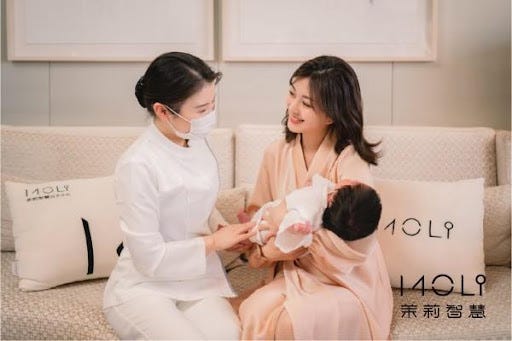
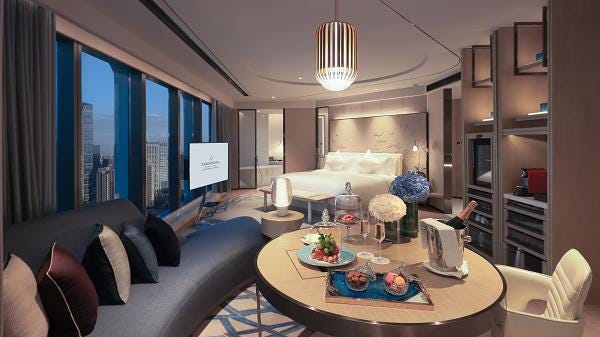
How do I know this, you ask? Because an acquaintance of mine works as a retreat sales rep and her Wechat moments are all promo. When she posts these advertisements, the constructed narrative is always “treating yourself to a luxury experience after an arduous feat”, or that “empowered women know how to take care of themselves”, or, most disturbingly, “your wife will thank you for paying the reparations”. She would talk about the “sweetest encounter at work today”, where a loving and indulgent husband paid the deposit (around 40K) up front without batting an eye because his wife has “done a hard job”. “Couple goals”, she writes constantly.
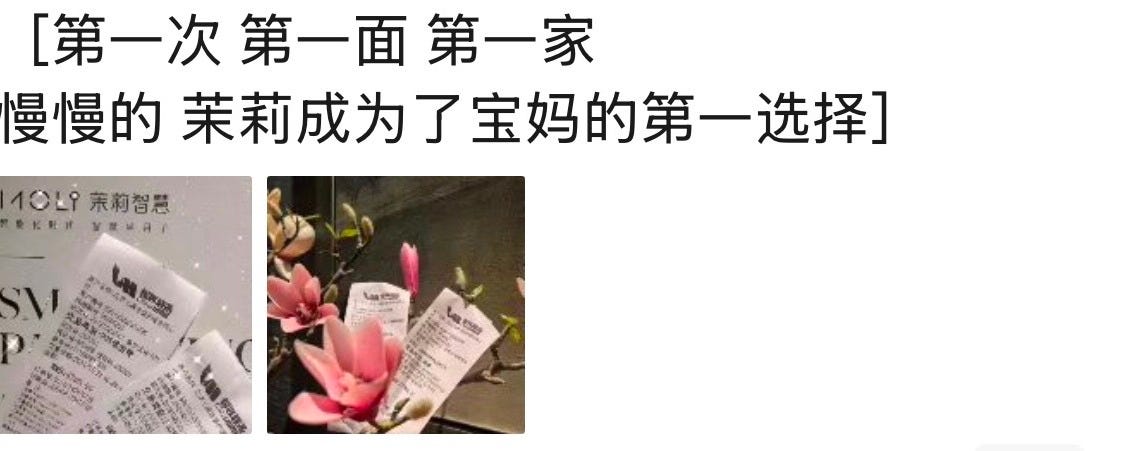
The retreat my acquaintance works at is called Moli, and it’s recently celebrated its fourth anniversary as a strong contender in the game. I watched their business boom as they expanded across China from Beijing and Shanghai into Hong Kong, Guangzhou, Shenzhen and Xiamen, while partnering up with celebrities and influencers for media exposure. Yes, celebrities are again co-opted to endorse marriages and motherhood, including big names like Lu Jingshan and her husband Han Geng, who used to be a global pop star as a part of Super Junior. Moli has also worked with a renowned female public intellectual “脱不花” to reinforce their empowerment, lean-in taglines. They seem unaffected by the lowering birth rate, since their target demographic of the more privileged class would be immune to costs and market shocks.
What’s truly concerning to me is how childrearing has become a status symbol. Made incredibly public by ten years worth of reality TV and then social media, marriages and motherhood are now considered somewhat ornamental, with everybody being hypersensitive to its outward appearance. It is also seen as “work” because, well, celebrities are dating and taking care of their children as work on shows like Super Mum. The government subsidies and various other birth incentives after the pandemic further consolidate this framing, where you are “rewarded” for your labour, which then heightens how pregnancy could feel transactional. And if childrearing is seen in a value-based system, then you must perform superiority. That is why these centres have “yassified” a hated tradition to supply couples with something to brag about, a frontispiece of extravagance. Celebrity endorsers feed into this coherent performance, because they likewise signify wealth and refinement. We’ve come full circle.
The underlying issue here is that in our culture, love too often boils down to “how much money is being spent”. If the parents spent over 200K on 坐月子 alone, it is likely that their child will grow up hearing “look how much we love you, we burnt through our earnings for you”. That child will grow up expecting a Birkin as an apology and feeling sufficiently loved by that act, or prepare a push gift but forget his child’s birthday in a couple of years’ time. In the fanquan world, that problematic equivalating of affection and expenditure has fuelled most of the so-called irrational fanning, overconsumption and parasociality. Both the gold-digging and the increasingly “purist”, romance-heavy dramas like “Pursuit of Jade” are two manifestations of the same paranoia: the hunger for love, for the proof of it over and over again, in the most abstract way and the most tangible because we’re not getting anything in between.
Instead of baby shows, the internet now watches parodies of the “原生家庭”, the birth family. It has been a heated point of contention on the internet these years as my generation started to reflect on the way we were brought up. That is a whole other can of worms I’m running out of space to delve into, but I do want to end this issue with two viral Bilibili accounts that mimic the twisted and tragically comedic way an archetypal Chinese family communicates. Both of the guys play their parents and act out petty arguments that escalate into everybody getting angry for no reason.
Every video is a study in psy-op and emotional extortion, and every line is a call for human connection spelt out in the most thorny, aching way.